




















Key takeaways:
-
- The development cost of asset tracking software in 2025 typically ranges between $8,000 and $30,000, depending on complexity and features.
- Major cost drivers include feature set, technology stack, integrations, development team location, and post-maintenance services.
- The global asset tracking market is projected to surpass $40 Billion by 2030, driven by IoT and cloud adoption.
- Asset tracking software improves efficiency, reduces losses, ensures real-time visibility, and enhances decision-making for businesses across industries.
“Streamline business management processes with asset tracking management software.”
Going through difficulties in managing different products or resources? You need an online solution to streamline the management, processing, and delivery of the assets to users in less time and at affordable rates. It is necessary to have a better understanding of the assets tracking software development cost before planning and making any move further.
As a business investor, there are multiple important things like features, alternatives, and success stories that you should know. But, knowing the cost to build asset tracking software is at top because it is affected by various market factors such as location, complexity, and platform.
This guide provides information on these factors with reducing methods in detail. Additionally, we will also study monetization strategies in the blog.
What is Assets Tracking Software?
Assets tracking software is a digital solution that monitors and manages an organization’s physical assets throughout their lifecycle. It utilizes technologies like barcodes, RFID, or GPS to provide real-time visibility into asset location, usage, and maintenance.
This software helps streamline inventory management, prevent loss or theft, optimize resource allocation, and ensure compliance with regulations. By automating tracking processes, it enhances efficiency, reduces manual errors, and ultimately maximizes the overall productivity of asset management system software development.

How Does Assets Tracking Software Work?
Asset tracking software operates by allowing users to input and organize information about their physical assets into a centralized digital system. Each asset is typically assigned a unique identifier, such as a barcode or RFID tag, which is scanned and recorded during various lifecycle stages.
Users can access the software to update details like location, maintenance history, and usage. Automation plays a key role, as sensors or GPS devices can provide real-time data, enabling users to monitor assets remotely.
The software often integrates with other Asset system management software like inventory management or maintenance schedules, facilitating seamless workflows. Advanced analytics may be employed to predict maintenance needs or optimize asset utilization.
Assets Tracking Software Development Cost
Creating custom asset tracking software involves several factors that contribute to its overall cost. Firstly, the complexity of the features you want plays a crucial role.
Basic systems for small businesses might cost around $10,000 to $15,000, while more advanced solutions for larger enterprises can range to $25,000 or more.Below is the table showing the cost to develop asset tracking software based on the development location:
| Location Factor | Estimated Cost |
| USA | $25000-$30000 |
| Australia | $20000-$25000 |
| India | $5000-$12000 |
| UK | $15000-$20000 |
| UAE | $8000-$15000 |
| Brazil | $12000-$16000 |
The choice of technology also impacts costs. Developing for a single platform is generally more affordable than creating a cross-platform solution. Additionally, the level of customization and integration with existing systems affects the budget.
Development time is a significant factor too. A simple asset tracking tool may take 2-4 months, while a comprehensive, tailored Asset management solution could extend to a year or more.
Finally, ongoing maintenance and updates should be considered. These costs ensure that your software remains compatible with evolving technologies and security standards. So, if you want to know the exact assets tracking software development cost, then you must consult with a custom software development company.
Factors Affecting the Cost to Make Assets Tracking Software
Developing asset tracking software involves various factors that can significantly impact the overall asset tracking software cost of the project. Let’s delve into some key aspects that influence the assets tracking software development cost.
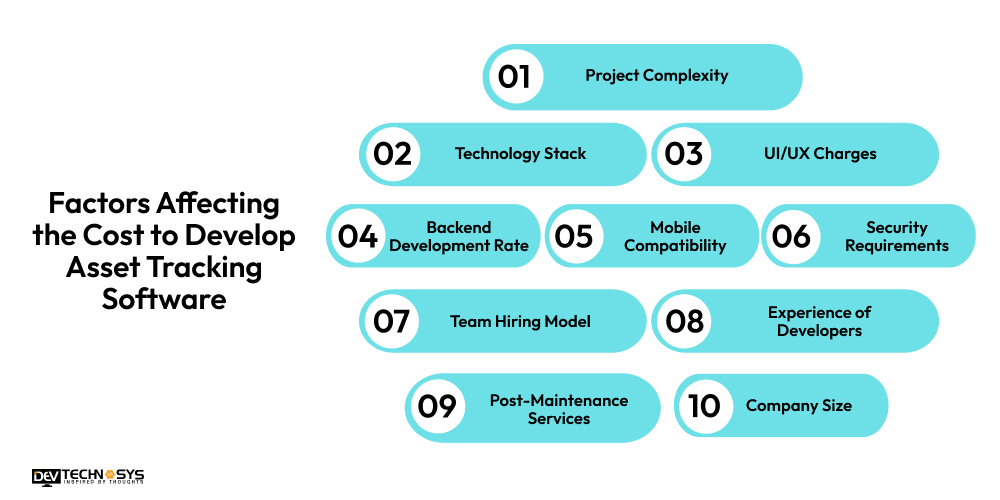
1. Project Complexity
The complexity and range of features in the software significantly impact the cost. Basic tracking systems may focus on location and status updates, while advanced solutions include features like predictive maintenance, integration with other systems, and customizable reporting. You must integrate this feature in your software with the help of the best software development company.
| Project Complexity | Development Time | Estimated Cost |
| Simple | 2-5 months | $5000-$10000 |
| Moderate | 5-8 months | $10000-$15000 |
| Complex | 8-12 months | $15000-$20000 |
| Premium | More than 12 months | $20000-$25000 |
2. Technology Stack
The choice of technology stack, including programming languages, databases, and frameworks, plays a role in development costs. Using cutting-edge technologies might result in higher initial expenses but could offer long-term benefits in terms of scalability and performance.
| Tech Component | Estimated Cost (USD) |
| Mobile Frameworks (Flutter/React Native) | $5,000 – $8,000 |
| Artificial Intelligence | $8,000-$12,000 |
| Blockchain | $12,000-$15,000 |
| Cloud Computing | $15,000-$20,000 |
| Cyber Security | $20,000-$25,000 |
| Cloud Hosting (AWS, Google Cloud) | $2,000 – $5,000 |
| Analytics & Monitoring Tools | $1,000 – $2,000 |
3. UI/UX Charges
A user-friendly interface and seamless user experience are crucial for the software’s success. Designing an intuitive UI and UX requires skilled professionals and thorough testing, impacting development costs. Well-designed interfaces enhance user adoption and satisfaction.
| Design Component | Estimated Cost (USD) |
| UI/UX Wireframes & Prototyping | $1,500 – $4,000 |
| Custom Visual Design & Branding | $2,000 – $6,000 |
| Motion Design/Animations | $1,000 – $3,000 |
4. Backend Development Rate:
The assets tracking software development cost is highly influenced by the use of multiple backend tools and frameworks. The implementation of databases and APIs have a little impact on the software development cost. But, using Node.js packages and React libraries may increase the rates.
| Backend Infrastructure | Estimated Cost |
| Databases | $8,000-$10,000 |
| API Integration | $10,000-$15,000 |
| Node Installation | $15,000-$17,000 |
| React Framework | $17,000-$20,000 |
5. Mobile Compatibility
Mobile compatibility is crucial for real-time tracking. Developing mobile applications for iOS, Android, or cross-platform solutions adds to the overall cost. Mobile integration allows users to access and update asset information on the go, enhancing flexibility.
| Mobile Compatibility | Estimated Cost |
| Android App | $10,000-$15,000 |
| iOS App | $15,000-$18,000 |
| Hybrid App | $18,000-$20,000 |
6. Security Requirements
Security is paramount, especially when dealing with sensitive asset data. Implementing robust security measures, such as encryption, access controls, and authentication protocols, can increase development costs but is essential for protecting valuable information.
| Security Component | Estimated Cost (USD) |
| Data Encryption (SSL, AES) | $2,000 – $5,000 |
| Secure Authentication (OAuth, 2FA) | $1,000 – $3,000 |
| Compliance (GDPR, HIPAA Setup) | $3,000 – $7,000 |
7. Team Hiring Model
Entrepreneurs can hire dedicated developers by following a suitable and affordable method. Creating an in-house team or choosing freelancers affects the asset management software development cost at a low scale. But, selecting the outreach program to hire developers increases the total app making price.
| Team Hiring | Estimated Cost |
| In House Team | $5,000-$8,000 |
| Full-Time Freelancers | $3,500-$5,000 |
| Developer Outreach | $8,000-$15,000 |
8. Experience of Developers
A junior developer can develop logistics software but have limited knowledge and skills. Hiring of an experienced or professional developer increases the asset tracking app development cost. This is because they provide extra services with advanced technologies and software creating tools.
| Experience Level | Cost Estimation |
| Junior/Entry-Level | $8000-$12000 |
| Mid-Level/Experienced | $12000-$16000 |
| Senior/Expert | $16000-$20000 |
| Professional | $20000-$24000 |
9. Post-Maintenance Services
After development, software maintenance is necessary to keep the platform updated and efficient. This affects the assets tracking software development cost at a large scale. Different tasks like removing bugs, feature enhancement, and working on security patches are the major factors driving the cost.
| Post-Maintenance Service Component | Estimated Cost Range |
| Bug Fixes & Updates | $1,000 – $1,500 |
| Feature Enhancements | $3,000 – $7,000 |
| Server & Hosting Maintenance | $1,500 – $3,000 |
| Technical Support & Security | $7,000 – $10,000 |
10. Company Size
You can approach a software development company to consult your business model before starting the development process. The asset tracking system development price is less for small businesses because of limited requirements. But big enterprises can afford expensive teams because of a strong financial motive.
| Company Size | Estimated Cost |
| Small Enterprises | $8,000-$12,000 |
| Medium-sized Enterprises | $12,000-$16,000 |
| Big Enterprises | $16,000-$20,000 |
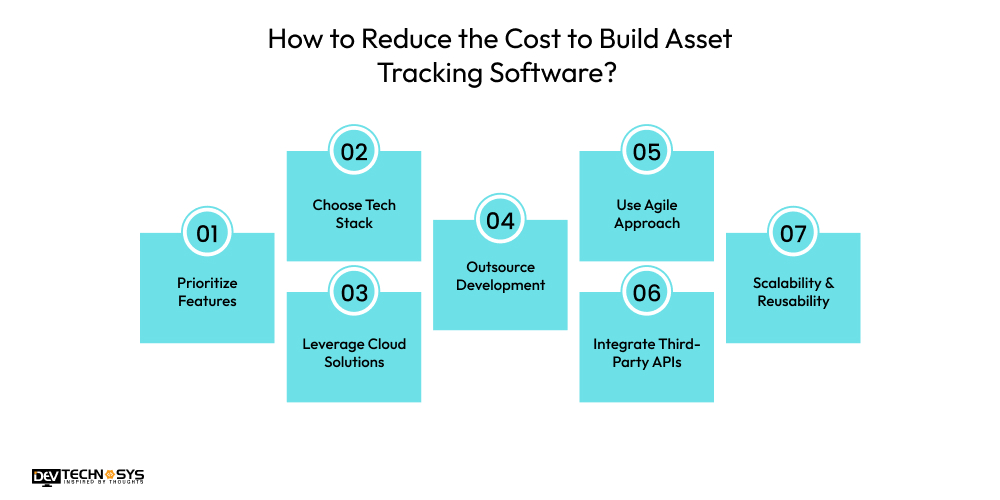
How to Reduce the Cost to Build Asset Tracking Software?
It is important to reduce the exceeding assets tracking software development cost. So, businesses can easily launch the platform in the market and get benefits such as revenue in return:
1. Prioritize Features
You must hire software developers to create an MVP that focuses on essential features like asset details, GPS tracking, and reporting. It is important to use custom asset tracking software development services to implement effective features. This guarantees a quicker market reach and lowers overall expenses.
| Component | % Cost Decrease |
| Eliminating non-essential features in MVP | 15–20% |
2. Choose Tech Stack
Businesses should choose cost-effective and scalable technology, like cloud databases and open-source frameworks. An effective tech stack lowers the cost to build asset tracking software and license fees. Additionally, it increases the software’s adaptability for upcoming security updates.
| Component | % Cost Decrease |
| Using open-source frameworks & tools | 10–18% |
3. Leverage Cloud Solutions
It is important to avoid investing in expensive big data infrastructure. You can implement cloud services to lower the cost to create asset tracking software related with maintenance, storage, and servers. Additionally, they guarantee great performance, scalability, and adaptability at a reduced cost.
| Component | % Cost Decrease |
| Avoiding on-premise infrastructure & hardware | 20–25% |
4. Outsource Development
To reduce the cost to make asset tracking software, you must collaborate with offshore development teams and find cost-effective developers. An experienced real estate app development company provides skilled and quality experts. This decreases cost and guarantees quality with on-time delivery.
| Component | % Cost Decrease |
| Hiring offshore/nearshore developers | 25–30% |
5. Use Agile Approach
Entrepreneurs may distribute the development process by implementing the Agile methodology. Testing and certification of features helps you to reduce the cost to create asset tracking software. This method guarantees effective use of resources and prevents unnecessary spending of budget.
| Component | % Cost Decrease |
| Reducing rework through iterative development | 12–15% |
Want a chatbot demo or pricing? Fill the form and talk to our experts today.
Pick what you need below — you can select more than one — then tap Get detail to continue.
-
Chatbot demo dashboard
-
Cost to develop an app
-
Industry report
-
Case study
6. Integrate Third-Party APIs
It is beneficial to integrate highly responsive APIs that are third-party which prevents extra investment. Maps, payment gateways, and notification systems are the major examples. This helps to manage development time, involves less work, and decreases the cost to make asset tracking software.
| Component | % Cost Decrease |
| Using APIs instead of building modules from scratch | 18–22% |
7. Scalability & Reusability
The cost to build asset tracking software can be reduced by using reusable and single codebases. This strategy helps businesses to easily scale or add features without requiring significant redesign. It lowers assets tracking software development cost and extends the software’s lifecycle.
| Component | % Cost Decrease |
| Modular architecture & reusable code | 15–20% |
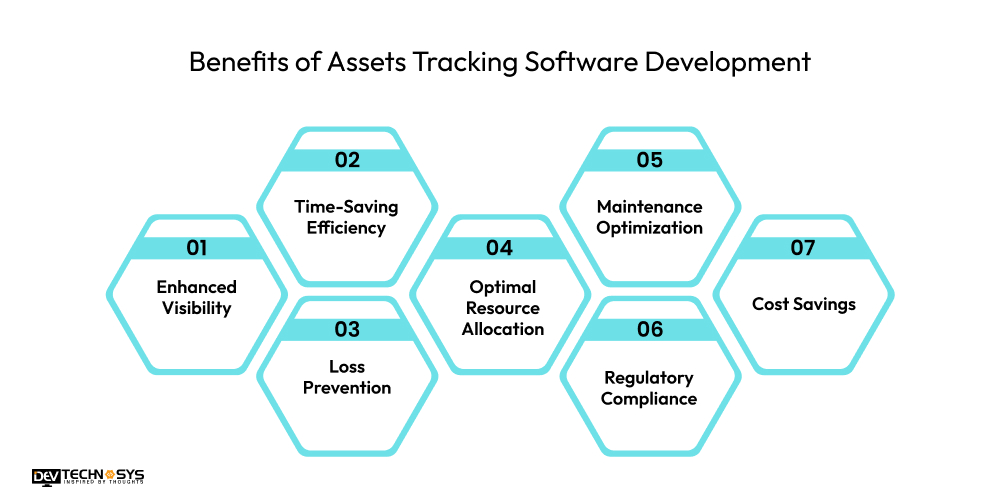
Benefits of Assets Tracking Software Development
As per the chatbot software development company, below are the benefits of Asset tracking software development. So let’s have a look at them:
1. Enhanced Visibility:
Imagine having a magic lens that reveals the exact location and status of all your company assets at any given moment. That’s what assets tracking software does. It provides a bird’s-eye view of your assets, preventing the frustration of searching high and low for that one crucial item.
2. Time-Saving Efficiency:
No more manual record-keeping or tedious spreadsheets. Assets tracking software automates the tracking process, freeing up valuable time for your software product development company. It’s like having a personal assistant that takes care of the nitty-gritty details, allowing your team to focus on more important tasks.
3. Loss Prevention:
Ever misplaced a tool or a piece of equipment? With assets tracking software, you can kiss those worries goodbye. It acts as a guardian, alerting you if an asset goes astray. This not only saves money by preventing losses but also avoids the headache of having to replace or repurchase items. Cloud computing software development keeps data quality in control and helps with disaster recovery and data loss.
4. Optimal Resource Allocation:
Knowing exactly where your assets are enables you to allocate resources more efficiently. No more overstocking or underutilizing equipment. It’s like having a smart advisor guiding you on the best way to distribute your assets for maximum productivity.
5. Maintenance Optimization:
Assets tracking software development cost isn’t just about location; it’s also about health. It reminds you when assets are due for maintenance, preventing unexpected breakdowns and prolonging the life of your equipment. It’s like having a personal trainer for your tools, keeping them in top-notch condition.
6. Regulatory Compliance:
In the world of business, rules and regulations are unavoidable. Assets tracking software ensures that you stay on the right side of compliance by providing accurate and up-to-date records. It’s like having a trustworthy companion that keeps you in check, ensuring you meet all the necessary standards.
7. Cost Savings:
Efficiency, loss prevention, optimal resource allocation, and maintenance optimization all add up to one thing—cost savings. Assets tracking software is an investment that pays off by reducing expenses associated with lost or underutilized assets, unexpected repairs, and regulatory fines.
Best Practices For Successful Asset Tracking Software Development
Successful asset tracking software development requires adherence to best practices to ensure a robust and effective solution. Here are some key practices to follow for the best assets tracking software development cost:
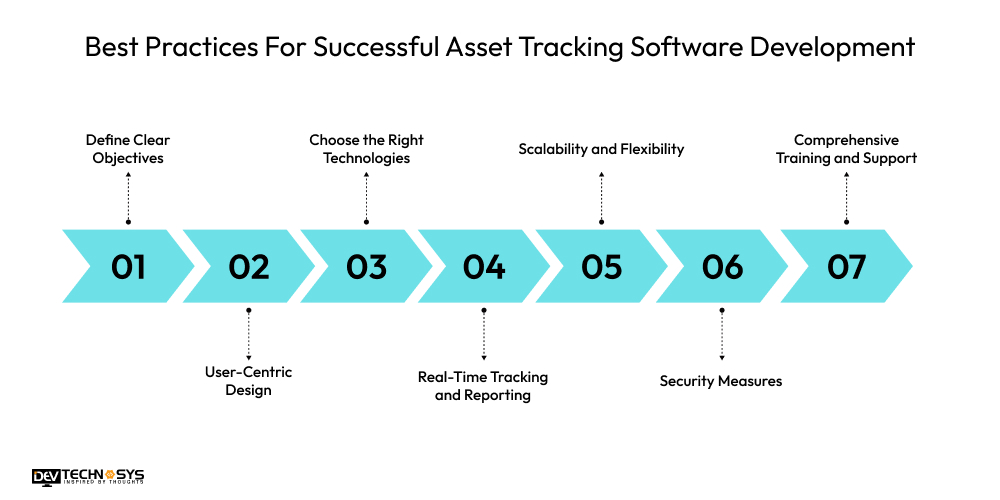
1. Define Clear Objectives:
Clearly outline the goals and objectives of your asset tracking software. Understand the specific needs and challenges of your organization to tailor the software to meet those requirements. Whether it’s minimizing loss, optimizing asset usage, or ensuring compliance, a well-defined purpose sets the foundation for development.
2. User-Centric Design:
Prioritize a user-friendly interface. Design the software with the end-users in mind, considering the needs of both technical and non-technical personnel who will interact with the system. Intuitive navigation and a visually appealing layout contribute to better adoption and utilization.
3. Choose the Right Technologies:
Select appropriate tracking technologies such as barcodes, RFID, or GPS, based on the nature of your assets and operational requirements. Ensure compatibility with existing hardware and systems to facilitate seamless integration. The right technology stack can significantly impact the accuracy and efficiency of asset tracking.
4. Real-Time Tracking and Reporting:
Implement real-time tracking capabilities to provide instant visibility into asset location and status. Incorporate reporting features that offer insights into asset utilization, maintenance history, and other relevant data. Real-time information empowers decision-making and helps proactively address issues before they escalate.

5. Scalability and Flexibility:
Design the software with scalability in mind to accommodate future growth and changes in asset volume. Ensure flexibility to adapt to evolving business processes and technological advancements. A scalable and flexible system can easily adjust to the dynamic needs of your organization over time.
6. Security Measures:
Prioritize data security to protect sensitive information related to your assets. Implement encryption, access controls, and authentication mechanisms to safeguard against unauthorized access and potential cyber threats. Compliance with data protection regulations is crucial, especially when dealing with sensitive asset information.
7. Comprehensive Training and Support:
Provide thorough training for users to ensure they can effectively utilize the asset tracking software. Clear documentation, tutorials, and ongoing support contribute to successful implementation. Addressing user concerns promptly and continuously improving the system based on feedback enhances user satisfaction and adoption.
How to Monetize Asset Tracking Software?
If you want to balance the investment, then using practical money-making methods is necessary. There are several monetization techniques available for businesses to easily generate revenue:
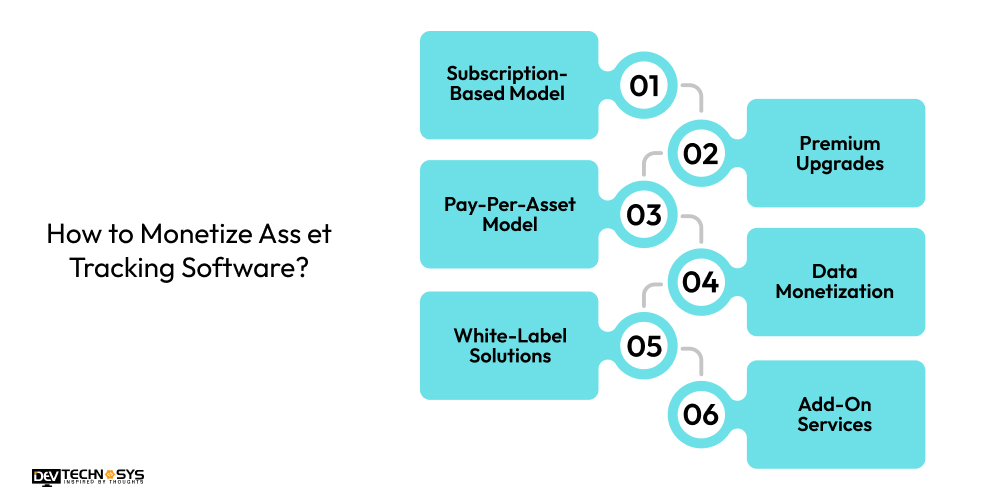
1. Subscription-Based Model
Depending on the quantity of users, assets, or features, you can charge a recurring monthly or annual cost. This offers adaptable programs and guarantees consistent, predictable revenue. It is beneficial to build barcode asset tracking software with different logistics requirements.
2. Premium Upgrades
Make money with advanced tools and provide a basic or free version with less capabilities. Predictive maintenance, AI-based analytics, and multi-location tracking helps to manage the cost to build asset tracking software. It allows users to pay for services while attracting more consumers with ease.
3. Pay-Per-Asset Model
Permit customers to pay according to the quantity of assets they have tracked. A GPS tracking software development company implements this strategy to balance changing needs and business expansion. It is scalable for big businesses and affordable for small businesses.
4. Data Monetization
It is important to combine asset usage data to offer useful information about the industry. You can offer third-party businesses with data-driven reports or forecasted trends. This facilitates decision-making, generates an extra source of income and manages the asset management software development cost.
5. White-Label Solutions
Entrepreneurs can give other businesses a license to use the software for rebranding it as their own. With asset software development, you may reach a wider audience and easily balance the cost to develop asset tracking software. Through licensing agreements and collaborations, it produces steady income.
6. Add-On Services
Offer premium extras like additional security features, IoT/GPS hardware bundles, or predictive analytics. Both consumer satisfaction and corporate profitability are raised by these optional offerings. They aid in setting your program apart from other asset tracking programs.

Let’s Sum Up!!
In this conclusion, we will only recap the topics that we have studied in this blog. This will help you to easily manage the assets tracking software development cost. It is beneficial to approach the best asset tracking software development company like Dev Technosys who provides:
- Useful methods to optimize the cost to develop asset tracking software.
- Teams of dedicated developers delivering smart and cost-effective solutions.
- Affordable services, from consulting to software maintenance.
- Powerful revenue models to generate income and make profit for business growth.
Entrepreneurs must grab these benefits to become successful in the logistics industry and launch a unique brand for users. With this, it will be easy to attract customers in large numbers and ensure their overall experiences.
FAQs
1. How Does Asset Tracking Software Work?
An asset management software work as follows:
- Gather information about a particular product or item.
- Uses APIs and backend data to track real-time location.
- Analyze the report and send it to the server.
2. What is the Average Assets Tracking Software Development Cost?
The average rate for developing asset tracking software is:
- Between $8,000 to $15,000 due to simple features.
- It may increase to $25,000 because of advanced technologies.
- There are several factors like location and experiences that affect the price.
3. How Long Does it Take to Create Asset Tracking Software?
The development time is divided in the following manner:
- For a less-complex app, the time is between 2 to 3 months.
- The duration increases to 6 months due to extra features.
- With AI, the overall time may extend to more than a year.
4. What is the Maintenance Cost of Logistics Software?
The cost of maintaining logistics tracking software is:
- Dependent on different factors like bug fixing and updates.
- It is between 15-20% of the overall development cost.
- For an app of $20,000, the maintenance rate is between $3,000 to $4,000.
5. How to Hire Experienced Software Developers?
Businesses can hire smart and skilled developers by:
- Preparing a document with budget requirements.
- Check past performances and take technical interviews.
- Discuss project outline with the selected candidate.
6. What Measures are Necessary to Secure User Data?
To protect users’ information, it is important to:
- Implement security algorithms and fraud detection methods.
- Use shell scripting, 2MFA, and biometrics for ID verification.
- Remove garbage errors to enhance overall performance.