













Key takeaways:
-
- AI-integrated apps or AI applications are becoming popular in this highly advanced and technological world.
- Generally, the cost to make an AI app in 2026 can be somewhere between $8,000 and $30,000.
- Applications throughout the industries are incorporating AI, whether in e-commerce, logistics, entertainment, healthcare, on-demand, or more.
- As the demand for AI applications is rising constantly, this market is predicted to reach USD 335.29 billion by 2026.
AI apps in 2026 are not only responding but also thinking, learning, and evolving with user interactions. Developing an intelligent app is no longer an option; it is an opportunity to compete in this highly advanced market.
Artificial Intelligence is rapidly advancing and giving entrepreneurs a choice to build an ai app that is smart and personalized. But having just an idea is not enough until you have a clear development roadmap.
From researching the market to support even after launch, every step of AI application development is essential. Here we are with an AI, NLP, or machine learning app development guide. It helps you streamline the development while reducing the risk.
Are you ready to create a high-performing, future-ready application? This guide is definitely for you, which makes your app stand out in a competitive market.
What is an AI App? Definition with Key Components & Technologies
AI apps are software that incorporates artificial intelligence to automate operations and stimulate human intelligence. Such an app works by learning from the data given, then makes decisions, and improves over time.
AI in applications across industries helps in automating operations, bringing personalization, and making work done efficiently. Be it chatbots or recommendation systems, AI is integrating advanced algorithms. It makes data processing and response delivery smart and quick.
Key Components and Technologies of Artificial Intelligence:
1. Machine Learning (ML)
Machine learning allows AI applications to learn from the data and get upgraded over time. It basically offers predictions and recommendations by regularly examining the user behavior and history.
2. Natural Language Processing (NLP)
With NLP development services, artificial intelligence helps the app easily understand and respond according to more humanized input. It lets the user chat, type, and speak exactly like talking to a real person.
3. Predictive Analytics
Predictive Analytics enables the app to identify what the person might be thinking or what happens next. These predictions can be based on the past data of users.
4. Computer Vision
Computer Vision helps the app “see” and understand images or videos. It can easily recognize faces, objects, or text inside pictures, just like humans do.
5. Deep Learning
Deep Learning is a more advanced way of learning for AI. It helps the app understand complex data like voice, images, or patterns more accurately with layered learning methods.
6. Automatic Speech Recognition (ASR)
Speech Recognition lets the app understand the words spoken by the users. With this, people can talk and convert that conversation into text and respond to it accurately.
7. Robotic Process Automation (RPA)
The RPA automates repetitive, regular tasks like data entry or sending emails. It saves time and reduces human effort by letting the app handle routine work automatically.

Market Prediction of AI App Development in Today’s World
It is witnessed that the global economy, business growth, and automation are highly driven by AI app development. AI apps are becoming popular throughout the industries, be it education, on-demand, logistics, or e-commerce. According to the market analysis by Statista, here is how AI app development is leading.
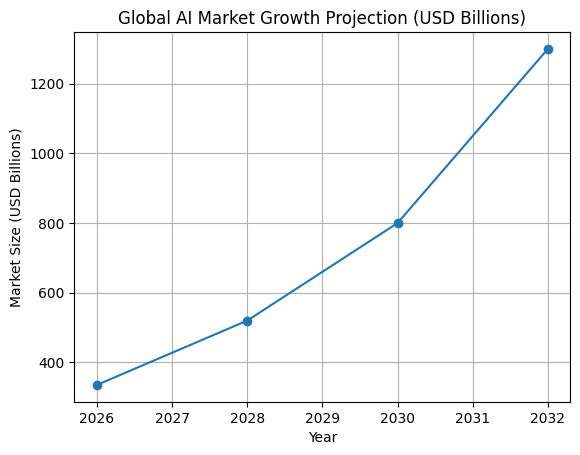
- The global AI market is expected to reach USD 335.29 billion by 2026, showing rapid growth.
- AI is projected to grow at a 25.38% CAGR from 2026 to 2032, indicating strong expansion.
- The market is expected to reach approximately USD 1.30 trillion by 2032, highlighting massive future potential.
- The United States is projected to lead the AI market with USD 75.14 billion by 2026.
- Countries worldwide are heavily investing in AI research and development to gain a competitive global advantage.
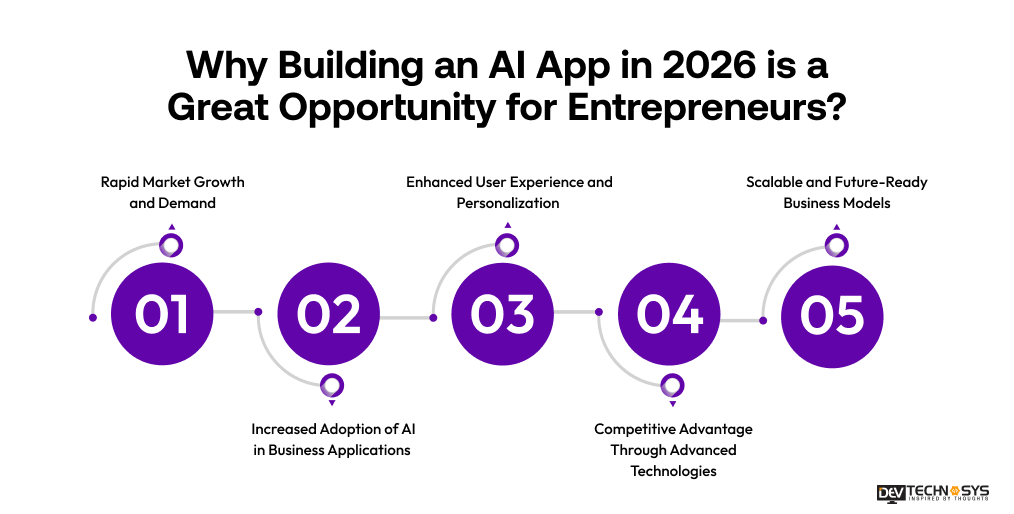
Why Building an AI App in 2026 is a Great Opportunity for Entrepreneurs?
Building an AI app in 2026 offers unmatched growth potential as businesses rapidly adopt intelligent technologies. With rising demand for automation and personalization, entrepreneurs create scalable, future-ready solutions. These can align with evolving digital trends and customer expectations by following an AI software development guide.
1. Rapid Market Growth and Demand
The AI industry is expanding at an unprecedented rate, creating strong demand for intelligent applications across industries. Entrepreneurs leveraging AI app development for startups can tap into this growth. It helps them build competitive products and capture market share in a highly evolving ecosystem.
2. Increased Adoption of AI in Business Applications
Businesses are integrating AI to automate operations and enhance decision-making. AI integration in business applications allows entrepreneurs to build solutions that improve efficiency, reduce costs, and deliver measurable ROI. It is making AI apps highly attractive across sectors like healthcare, finance, and retail.
3. Enhanced User Experience and Personalization
AI enables advanced personalization through behavior tracking and predictive insights. By implementing AI-powered user experience optimization, entrepreneurs can deliver tailored content, recommendations, and interactions. It improves user engagement, satisfaction, and retention in modern mobile and web applications.
4. Competitive Advantage Through Advanced Technologies
By utilizing deep learning application development and predictive analytics in mobile apps, businesses offer smarter, data-driven solutions. Entrepreneurs can differentiate their AI apps with intelligent features, gaining a strong competitive edge in crowded markets. It also attracts more users and investors.
5. Scalable and Future-Ready Business Models
AI apps are highly scalable due to cloud integration and continuous learning capabilities. With proper AI model training and deployment, entrepreneurs can build adaptable solutions that evolve with user data. It also ensures long-term growth, sustainability, and relevance in a rapidly advancing technological landscape.
Confused Between AI and Traditional Development? Here’s What You Need to Know
The confusion between selecting traditional or AI-driven app development is real. After all, this choice significantly affects the app’s scalability, performance, and user experience. We will explain the core difference between these two. It will help businesses to make smart, future-ready, and informed development decisions.
Aspect |
AI Development |
Traditional Development |
| Core Approach | Data-driven and learning-based | Rule-based and logic-driven |
| Functionality | Adapts and improves over time | Performs predefined functions |
| Decision Making | Uses algorithms to make intelligent decisions | Relies on fixed instructions |
| Data Usage | Requires large datasets for training | Minimal or structured data usage |
| Flexibility | Highly dynamic and adaptive | Limited flexibility |
| User Experience | Personalized and predictive | Static and uniform |
| Development Process | Involves model training and testing | Linear coding and testing |
| Maintenance | Continuous learning and updates | Periodic updates and bug fixes |
| Cost Structure | Higher initial cost, long-term efficiency | Lower initial cost, higher manual scaling cost |
| Use Cases | Chatbots, recommendation systems, automation | CRUD apps, static websites, simple tools |
Want a chatbot demo or pricing? Fill the form and talk to our experts today.
Pick what you need below — you can select more than one — then tap Get detail to continue.
-
Chatbot demo dashboard
-
Cost to develop an app
-
Industry report
-
Case study
What is the Tech Stack Required to Build an AI App?
The most essential part to develop an AI app is the tech stack. The best tech stack for AI app development includes tools, frameworks, databases, and technologies. It will create a seamless frontend, backend, AI models, data handling, and cloud deployment. Let’s understand this through a table:
Layer |
Technologies / Tools |
Purpose |
| Frontend | React, Flutter, Swift | Build user interface & experience |
| Backend | Node.js, Django, FastAPI | Handle logic, APIs & server-side |
| AI/ML Frameworks | TensorFlow, PyTorch, Scikit-learn | Train and deploy AI models |
| Data Processing | Pandas, NumPy, Apache Spark | Data cleaning & transformation |
| APIs & Integration | OpenAI API, Google AI APIs, REST APIs | Add AI features & integrations |
| Database | MongoDB, PostgreSQL, Firebase | Store and manage data |
| Cloud/DevOps | AWS, Azure, Docker, Kubernetes | Deployment & scalability |
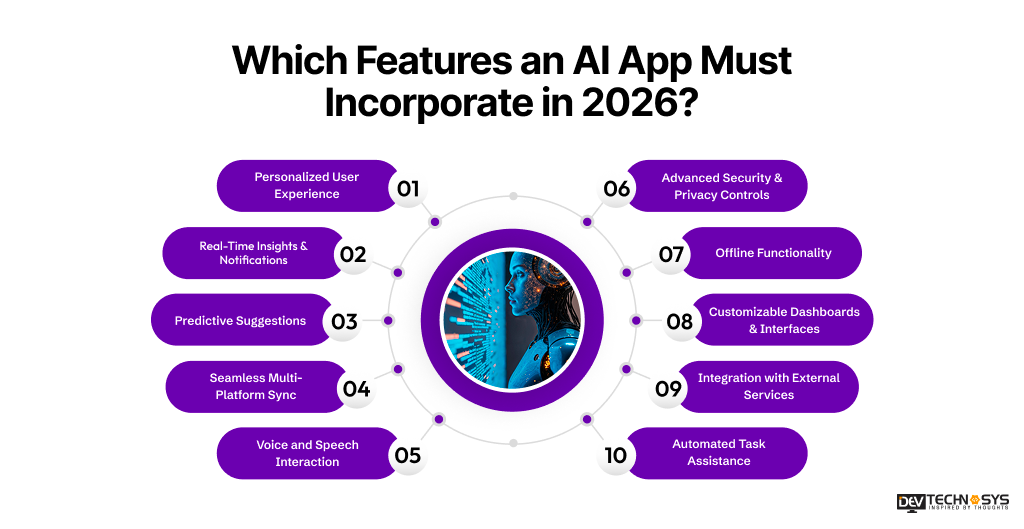
Which Features an AI App Must Incorporate in 2026?
Features play a vital role in building an AI app that becomes successful and user-friendly. The user-centric features of AI applications that an AI development company incorporates guarantee high engagement. Also, these features make an app reliable and scalable in this competitive digital market.
Feature |
Benefit |
Example / Application |
| Personalized User Experience | Tailors content and interactions to each user, boosting engagement and retention | AI-driven recommendations in e-commerce or content apps |
| Real-Time Insights & Notifications | Provides instant updates and actionable alerts for quick decision-making | Stock alerts, app activity reminders, or analytics dashboards |
| Predictive Suggestions | Anticipates user needs and recommends relevant actions or content | Personalized product suggestions, smart task reminders |
| Seamless Multi-Platform Sync | Ensures consistent experience across devices like mobile, tablet, and web | Cloud-synced apps like Notion or Google Workspace |
| Voice and Speech Interaction | Enables hands-free operation and accessibility for all users | Voice commands in virtual assistants or smart apps |
| Advanced Security & Privacy Controls | Protects sensitive data with encryption and compliance standards | GDPR-compliant user data handling, secure payment apps |
| Offline Functionality | Allows key app operations without internet connectivity | Offline content access, offline note-taking apps |
| Customizable Dashboards & Interfaces | Let users personalize layouts, themes, and shortcuts for efficiency | Adjustable dashboards in analytics or productivity apps |
| Integration with External Services | Connects to APIs, cloud tools, and social media for expanded functionality | Payment gateways, calendar syncing, and social sharing |
| Automated Task Assistance | Automates repetitive tasks to save time and enhance productivity | AI-driven scheduling, reminders, or content generation |
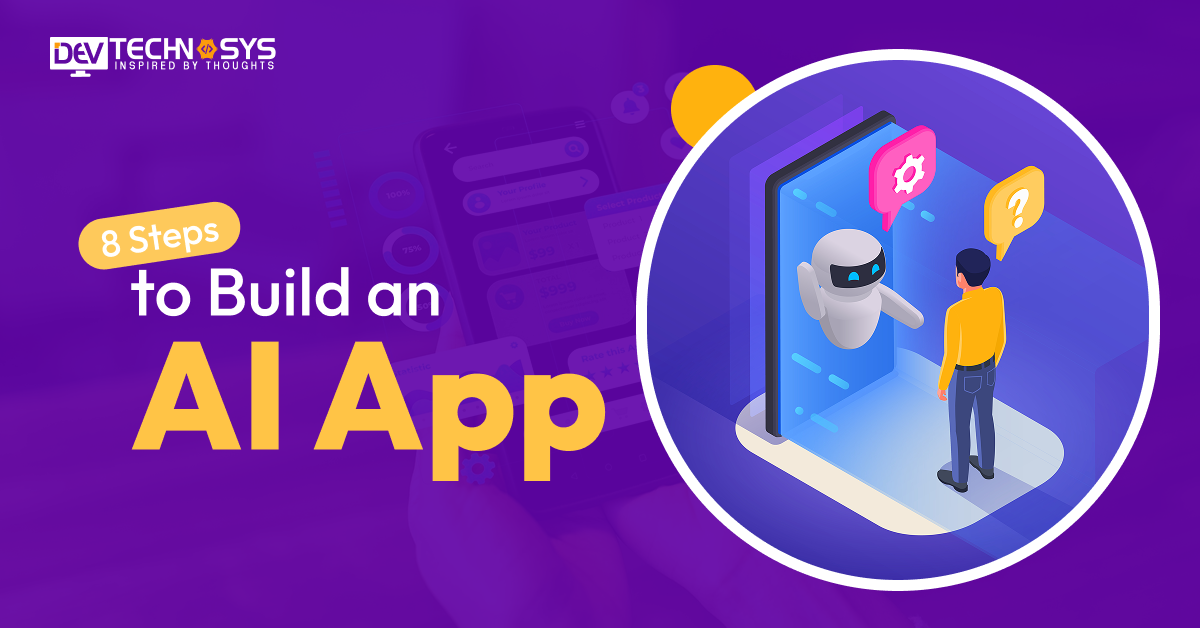
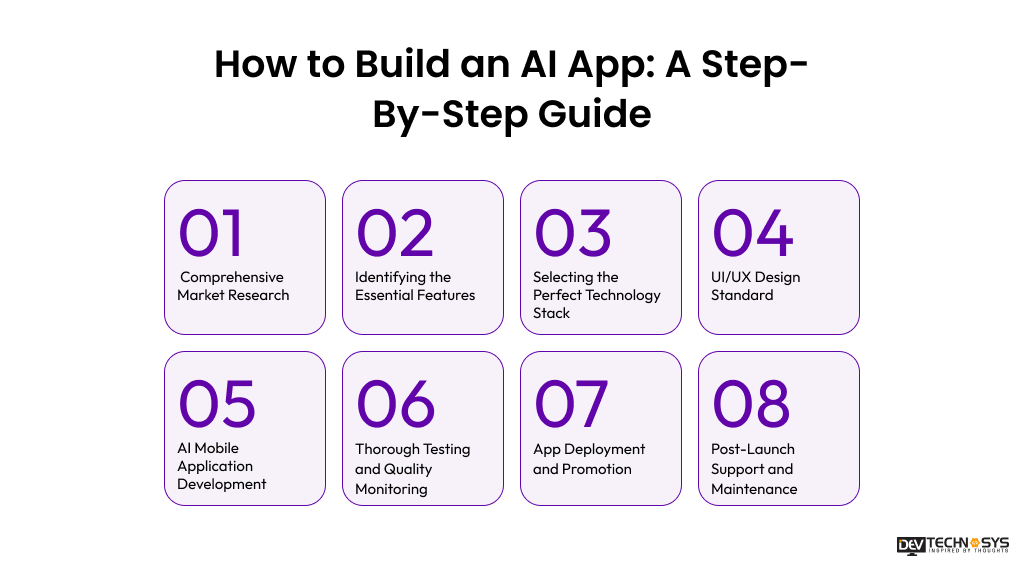
How to Build an AI App: A Step-By-Step Guide
Developing an AI app means turning your concept into a game-changing digital solution. These solutions are made to bring automation and solve real problems. An AI chatbot development company follows these steps in a structured way to make your final app development more manageable. So here is the step-by-step AI app development process.
Step 1: Comprehensive Market Research
The market demand, competitors, and targeted audiences should be first analyzed. After that, businesses must conduct surveys, interviews, and feasibility studies to identify the pain points they should focus on.
It is really important to understand the real problems of users and find AI solutions to address them. When the first step of the AI app development process is done right, it maximizes the app adoption potential.
Step 2: Identifying the Essential Features
List the essential features that are highly meant to solve the real issues of the users. Therefore, entrepreneurs have to focus on features like automation, personalization, and predictive analytics first.
Selecting ideal features can lead to higher usability, performance, and return on investment. Also, add features that are AI-driven and differentiate your app from competitors. Also, this will make the app unique while ensuring outstanding user engagement.
Step 3: Selecting the Perfect Technology Stack
The selection of the technology stack should be definite and careful during the AI software development service. It involves the choice of the perfect programming languages, frameworks, and AI tools.
When the technologies are selected properly, they will guarantee scalability and performance. The important aspects that an AI app works on are data processing and real-time analytics. For this, integrating suitable models, cloud services, and APIs is essential.
Step 4: UI/UX Design Standard
Create an easy-to-use, attractive interface that provides access and usability to the users. Use simple, uncluttered layouts, clear navigation, and responsive design. It makes sure the app works smoothly on all the different devices.
The AI functionality with UI/UX should be easy to use, understand, and utilize. The end result should give a user-oriented experience that will help build user satisfaction and encourage loyalty.
Step 5: AI Mobile Application Development
It’s time to build an AI app utilizing agile methodologies. This development also integrates automation, predictive tools, and ML development services. In this step, backend integration, scalable architecture, and fast processing are ensured.
Also, the performance of AI is optimized properly with the latest tools. Basically, this step is to align the app with functional and business objectives. The high performance and scalability of this development can meet user expectations.
Step 6: Thorough Testing and Quality Monitoring
As the app is built, it is now necessary to test it properly to ensure quality assurance. This step includes functional, performance, and AI model accuracy testing. It will identify the bugs, glitches, data inconsistencies, or security issues on multiple devices before launch.
When the app is tested thoroughly, it guarantees reliability and accuracy, which will lead to user satisfaction and retention. It directly impacts ratings, engagement, and long-term success.
Step 7: App Deployment and Promotion
The next step of this AI app development lifecycle is to launch the app on the app stores. For this, entrepreneurs must focus on App Store Optimization (ASO) in detail. But deploying on the app store is not enough; the app needs to be promoted to reach its targeted audience.
Promoting the app using techniques like SEO, content marketing, influencer collaborations, paid ads, etc. It is included in the intelligent app development strategies.
Step 8: Post-Launch Support and Maintenance
After releasing the app for users, it is important to keep it as per the market demand and competition. For this, continuous support, maintenance, updates, and refinements are needed. These upgrades are made according to user feedback and analytics.
This step is by default added to the Artificial Intelligence development services that fix issues and optimize performance. Ongoing maintenance ensures long-term app success, retaining users and keeping the AI solution relevant in a fast-evolving market.

What is the Cost to Build an AI App? Get a Detailed Estimation
The average cost to build an AI app in 2026 can be commonly estimated at $8,000 to $30,000. The final development budget is highly determined by the app’s complexity. We will understand it like this:
- A basic app with simple integrations follows an MVP development structure, lowering the complexity. This way, the final development cost can range from $8,000 to $16,000.
- A mid-level app has moderate complexity because it is a combination of basic and advanced integrations. This makes the overall cost between $16,000 and $22,000.
- An advanced app has highly modern integrations, leading to higher complexity. Due to this, the cost can range from $22,000 to $30,000.
We will clearly understand this cost structure through a breakdown table:
App Complexity |
Estimated Cost |
Key Features Included |
| Basic AI App | $8,000 – $16,000 | Simple AI features (chatbot, basic automation), limited data processing, pre-trained models |
| Mid-Level AI App | $16,000 – $22,000 | Custom AI models, moderate data handling, API integrations, improved UI/UX |
| Advanced AI App | $22,000 – $30,000 | Deep learning models, real-time processing, predictive analytics, and high scalability |
Despite complexity, several more factors can influence the cost to develop a mobile app. These factors include the app’s features, backend integration, security & compliance, third-party APIs, UI/UX design, and so on. We will explain some of these factors with separate cost structures.
1. Choice of Platform
Choosing whether to create an AI app on Android, iOS, or both widely affects the development budget. Building apps natively requires a separate developer, time, effort, and resources. This can increase the development price as compared to cross-platform or web-based solutions.
Platform Type |
Estimated Cost |
Description |
| Single Platform | $8,000 – $15,000 | Native app for either iOS or Android |
| Cross-Platform | $12,000 – $22,000 | One codebase for multiple platforms |
| Multi-Platform | $20,000 – $30,000+ | Separate native apps for iOS and Android |
2. Development Team
The size, expertise, and structure of your development team significantly influence cost. Hiring freelancers is cost-effective but is limited, and in-house teams fully control development but work on a salary basis. Whereas development companies provide expertise, scalability, and faster delivery at a higher cost.
Team Type |
Estimated Cost |
Description |
| Freelancer | $3,000 – $6,000 | Cost-effective, suitable for small AI projects |
| In-House Team | $8,000 – $15,000 | High control, long-term investment |
| Development Company | $10,000 – $15,000+ | Skilled team, scalable and faster delivery |
3. UI/UX Design Standard
The final cost to build Artificial Intelligence project also depends on the design standards. The interface of the AI mobile app development must be interactive and user-friendly. This can increase the development time, resources, design complexity, and overall development cost.
Design Level |
Estimated Cost |
Description |
| Basic Design | $2,000 – $4,000 | Simple layouts with minimal user interaction |
| Moderate Design | $4,000 – $7,000 | Improved visuals and user experience |
| Advanced Design | $7,000 – $10,000+ | Highly interactive, AI-driven personalization |
4. Third-Party APIs
Incorporating pre-built APIs in AI mobile apps can increase the development speed. Third-party APIs include AI services like NLP, vision APIs, or payment gateways. With increased development speed, these APIs come with licensing or usage costs, which can increase the final development expenses.
API Type |
Estimated Cost |
Description |
| Basic APIs | $800 – $1,500 | Simple integrations like authentication or maps |
| AI APIs | $1,500 – $2,500 | NLP, chatbots, or recommendation engines |
| Advanced APIs | $2,500 – $3,500+ | Real-time AI, vision, or complex integrations |
5. Developer’s Location
The development cost to develop an AI mobile app can be influenced by the region of the developers. If you hire dedicated developers from North America or Europe, they charge a higher per-hour development price. Whereas hiring developers from Asia and Eastern Europe can be less expensive.
Region |
Estimated Cost |
Description |
| Asia (India, etc.) | $1,000 – $3,000 | Cost-effective with skilled developers |
| Eastern Europe | $3,000 – $5,000 | Balanced cost and expertise |
| North America | $5,000 – $6,000+ | High cost with premium development services |
Best Real-World AI Applications You Should Know in 2026
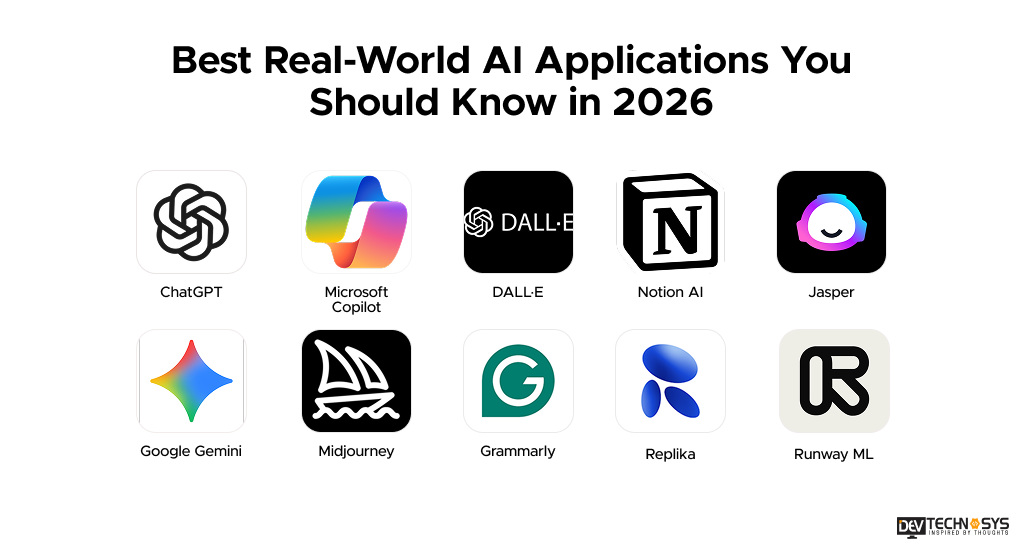
AI is transforming every industry by streamlining tasks and enhancing productivity. It also offers personalization and advanced decision-making ability to users. From virtual assistants to design tools, the world of AI is extremely vast. Here we are explaining real-world examples of AI applications used worldwide in 2026.
AI App |
Category |
Key Feature |
Use Case |
Launch Year |
Rating |
| ChatGPT | Conversational AI | Natural language processing | Content creation, support | 2022 | 4.7 |
| Google Gemini | AI Assistant | Multimodal AI capabilities | Search, productivity | 2023 | 4.5 |
| Microsoft Copilot | Productivity | AI-powered automation | Docs, coding, workflows | 2023 | 4.6 |
| Midjourney | Image Generation | High-quality AI art | Design, branding | 2022 | 4.8 |
| DALL·E | Image Generation | Text-to-image generation | Visual content | 2021 | 4.6 |
| Grammarly | Writing Assistant | Grammar & tone correction | Emails, content editing | 2009 | 4.7 |
| Notion AI | Productivity | Smart documentation | Notes, project management | 2023 | 4.5 |
| Jasper | Marketing AI | AI copywriting tools | Ads, blogs | 2021 | 4.4 |
| Replika | Conversational AI | Emotional AI interaction | Personal chat | 2017 | 4.3 |
| Runway ML | Video AI | AI video generation | Content creation | 2018 | 4.6 |
We will now explain some of these AI apps and how they are helping humans with regular tasks. These apps can be a great reference to build an AI app to bring ease in this high-tech world.
1. Google Gemini
Google Gemini is an AI assistant that processes text, images, and code. It is a strong multimodal assistant that delivers quick and context-related responses. Google Gemini is an ideal tool for research purposes, efficiently completing tasks, and making immediate decisions.
2. Midjourney
Midjourney is a well-known tool that is used to create high-quality visuals and images. It can develop attractive, creative, and detailed images with text prompts. Midjourney is a popular tool highly preferred by marketers, designers, and artists for digital content creation.
3. Jasper
Jasper is a popular marketing AI tool designed for content creation for promotional purposes for businesses. It provides templates, SEO-focused writing, and customized content according to the brand. Jasper helps in generating conversional blogs, advertisements, and social media posts.
4. Grammarly
Grammarly is a writing tool powered by AI that improves writing quality. It checks grammar, detects writing tone, and gives suggestions to improve writing skills. Grammarly helps users draft emails, professional documents, or blog content with accuracy and efficiency.
5. Runway ML
Runway ML is an advanced and AI-driven video editing and generation tool. It offers options like background removal, text-to-video, and real-time editing. Runway ML is a perfect tool for creators, filmmakers, and content producers to bring efficiency in production workflows.

How Do AI Apps Make Money? Monetization Strategies
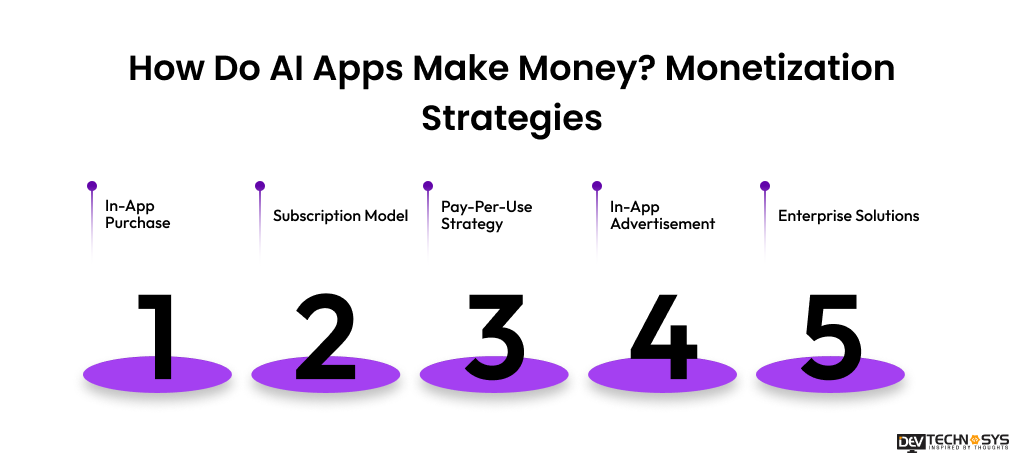
A successful AI app development firm implements several money-making measures like subscriptions, in-app purchases, or advertising. Selecting an ideal model depends on user behavior, market demand, and the app’s capabilities. Here are the top monetization strategies an AI-driven platform can incorporate.
1. In-App Purchase
An in-app purchase model in an AI application can generate revenue by offering additional services for a price. These services include credit, templates & tools, ad-free experience, and more. Users pay for these facilities, and the app makes a steady income.
2. Subscription Model
In the subscription model, people are asked for a quarterly, monthly, or yearly fee to avail premium services. This is a widely accepted model that guarantees continuous profits. It also improves user experience by offering enhanced services and capabilities.
3. Pay-Per-Use Strategy
When businesses create a mobile app powered by AI, they must integrate a pay-per-use revenue model. With this strategy, the user is charged only according to their usage. It is a perfect option for AI tools where consumption varies.
4. In-App Advertisement
Enterprise AI solution development also integrates an in-app advertisement monetization model. In this model, AI apps earn revenue by displaying several advertisements like banners, videos, or sponsored content. The app makes income through user engagement and impressions.
5. Enterprise Solutions
Businesses can build an AI app that is designed for their business requirements, operations, and goals. These solutions can automate the processes, improve efficiency, and handle difficult tasks effectively. This way, the AI app becomes a highly profitable B2B model.
Key Challenges in AI App Development and How to Overcome Them
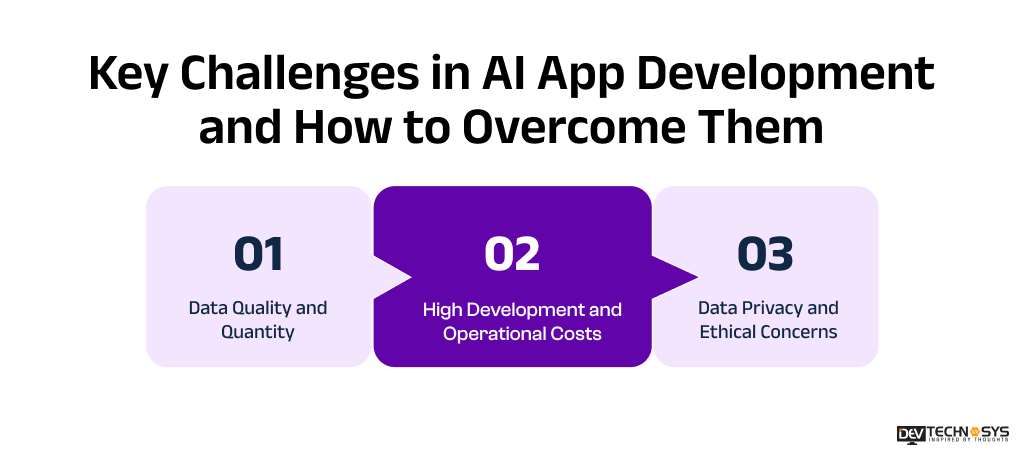
Despite everything going well, there are some challenges that might appear during data-driven application development. In this section, we will address some of these difficulties and measures to control and remove them.
1. Data Quality and Quantity
Large and high-quality datasets are required for AI models to maintain performance accuracy. If the data is unreliable, poor, incomplete, or biased, it can give unreliable outputs. Incorrect predictions can lead to efficiency issues and affect the app’s functions.
The solution to the data quality and quantity issue is:
- Datasets should be structured, clean, and different
- Data preprocessing and validation techniques should be used
- Training data should be updated and refined regularly
2. High Development and Operational Costs
An AI app or AI Agent development requires data collection, model training, skilled developers, and scalable infrastructure. All these can elevate the AI application development and operational costs. Also, ongoing tasks like cloud computing, maintenance, and updates can increase expenses.
The way to move out of this issue is:
- Go for MVP development with pre-built models
- Utilize cloud services that are cost-effective
- To reduce computation costs, optimizing models is necessary
3. Data Privacy and Ethical Concerns
AI applications usually handle and manage the sensitive data of users. This can raise concerns related to security, ethical usage, and privacy. Once the security gets breached and data gets compromised, it can lead to legal and compliance risks.
To tackle this trouble, implement strategies like:
- Add security measures and data encryption
- Compliance standards like GDPR should be followed
- The AI’s decision-making should be transparent
You can reach out anytime; we are available 24/7. Our team provides a quick response.

Final Words
Artificial Intelligence has taken over and automated every normal, manual operation. AI in the latest apps in multiple industries is no longer an option to be added later. But it has become a necessity that reshapes the way operations are performed.
That was a time when one task required hours and multiple humans to get it done. But AI has made it easier by automating everything, reducing manual efforts, and lowering the timeline. If you have an idea to build something, why not smarten it up with AI?
The year 2026 is empowered by AI in every segment and every way. App creation is not just about technology, but about solving real problems and creating great experiences. Reaching out to a mobile app development agency can help you build an AI solution.
Those who are welcoming AI today are not only building apps, but they are building the future.
Frequently Asked Questions
Find answers to the most common questions related to this article.
To build an AI app, several steps need to be followed in a serial manner. The steps are:
Market Research and Idea Validation
Deciding on Core Features
Selecting the Best Technologies
Standardizing UI/UX Design
AI-Powered App Development
Testing and Quality Assurance
App Launch and Marketing
After-Launch Support and Maintenance
Following these steps carefully and strategically can result in a seamless AI mobile application.
The overall cost to build an AI app in 2026 can range from $8,000 to $30,000. The final development budget is determined by the app’s complexity. Apart from that, there are several more factors that can affect the overall development price. These factors include features, platform choice, developer’s location, backend, security, tech stack, and more.
Entrepreneurs are primarily investing in AI app development in 2026 because of the following reasons:
Significant Competitive Advantage
Improved Decision-Making and Insights
Complex Task Automation
Accelerated Growth and Scalability
Reduced Operational Costs
Personalized Experience at Scale
Developing an AI mobile app gives startups and large businesses an opportunity to be competitive in today’s digitalized world.
Here are the essential steps through which AI can be integrated into mobile apps:
Define the core objective clearly
Choose the approach: either a third-party API or custom models
Gather the data to train these models
Connect these models to the app’s infrastructure
Use on-device frameworks for faster performance without the internet
Test the AI performance in the app to enhance user experience
It is evident that AI is becoming an essential part of almost every industry throughout the world. Here we are naming some of the AI apps that are revolutionizing the way industries work. Some of the popular AI apps are:
ChatGPT
Microsoft Copilot
DALL·E
Grammarly
Notion AI
Replika
Runway ML